skip to main |
skip to sidebar

 Snowshoes cat first appeared in 1960s in America, as a result of cross-breeding between a Siamese and a bi-colored American Shorthair. A a hybrid cat originating as a variant from Siamese parents. The origin of the Snowshoe can be traced back to 1960 when Dorothy Hinds Daugherty, Kensing Cattery, Philadelphia, PA found three kittens in a litter of Siamese, each with four white feet. Although the variant did not re-occur, Dorothy liked the contrast between the point color and the stark white of the feet and developed the first Snowshoe line by crossing her Siamese with a bicolor American Shorthair. Continued breeding eventually produced the popular 'V' face of the current Snowshoe. The Snowshoe is considered to be a rare breed.
The cross-breed between a Siamese and a bi-colored American Shorthair produced a sturdy, pointed cat with white markings on the face, chest and feet. The nose may appear to be considerably longer than it actually is due to variations of the inverted V' pattern. Older males may have a more rounded appearance due to stud jowls. The ears are large and triangular. The head will also be triangular. The Snowshoe is a balanced cat, neither too small nor too large; it is firm, muscular without being bulky with a medium-sized tail. Males are medium to medium large in size while Females are small to medium. In pure-breds, the eyes are always blue. Coat is short-haired, and is white and gray. The tail is medium-sized. Snowshoe cats come in Blue-point, Fawn-point, Chocolate-point and Seal-point. Snowshoe kittens are all born white. Their colors and markings become visible within 1-3 weeks after being born. The pattern on each of these cats are different for each Snowshoe. No two Snowshoes are alike.
The Snowshoe is generally a talker, with a soft, melodic voice and habitats well in a multiple cat family. They are generally sweet tempered, a friendly cat that manages to retain the astute intelligence. Offers many hours of delightful entertainment and a cats lifetime of affectionate companionship. They are a very social breed that requires more attention than most cats do, and consequently cannot be left alone for long periods of time. In a typical household they will be friendly to everyone, but will usually devote themselves almost entirely to one person. They get along well with other Snowshoes, cats of other breeds, and even dogs.
 The Somali Cat is a long haired descendant of the Abyssinian cat. The breed appeared spontaneously in the 1950s from Abyssinian breeding programs when a number of Abyssinian kittens were born with bottle-brush tails and long fluffy coats. The only difference between them is the fur length and therefore the amount of grooming required. Unlike most long-haired cats, Somalis shed very little excess hair. In the 1960's, however, cat fanciers began to realize the exquisite beauty of the long haired Abyssinian, and soon the Somali - named after the country bordering 'Abyssinia' - breed was born. Though more recent studies indicate that the Somali could have originated in England during the aftermath of World Wars I and II when Abyssinians had dwindled to near extinction. Breeders were forced to mix other cats, possibly carrying a long haired gene, into their Abyssinian breeding programmes. A real feature of the Somali is the tail, which has earned them the name the Feline Fox.
Somalis are medium to large cats, a well-proportioned muscular body with an overall impression of alertness, intelligence and keen curiosity. Somalis have small litters of three to four kittens, which develop slowly. They reach their full size at about eighteen months of age. The coat is from two to three inches long, but is easy to care for. The Somali cat's coat comes in beautiful shades of ruddy, red, blue and fawn with a striking, bushy tail. In addition to the fluffy tail, the Somali breed features a black stripe down its back, large ears, a full ruff and breeches, contributing further to the overall "foxy" look. A quality Somali has no stripes on its body. A pet-quality Somali may show some tabby striping on its legs, tail or throat. The ticking usually causes a darker shine of color along the cat's back and on the tip of its brushy tail, and gives the cat an exotic, wild look. Somalis have the tabby "M" on their foreheads, and display pencil-strokes of darker color drawn out from the corners of their eyes. As the darker color also rims their eyes, Somalis may look as if they're wearing eye liner.
Somali cats are active, playful, intelligent, interactive, affectionate and lots of fun. Somalis captivate their owners with their incredible charm, charisma and sense of humor. Somalis seem to wake up every morning with a bursts of energy. They should be given plenty of room to run, lots of individual attention and play, and a variety of toys. Adept at opening cupboards and drawers. Many Somalis can manipulate faucets, and they love to play with water. However, they tend to be calmer and less active than the Abyssinian. Somalis are even-tempered and easy to handle, generally quiet cats, with soft voices. They communicate with human family members through soft mews and possess a charming trill. One characteristic of many Somalis is the hairdresser gene they seem to love licking and grooming peoples hair. Remember to keep her warm, the Somali is not a cat of cold climes. A true Abyssinian, she takes to the warm.
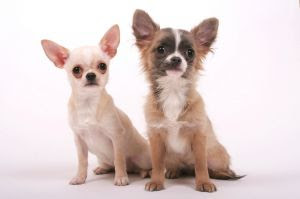 Chihuahuas are discovered by Americans in Mexico around 1850. The true origins of the Chihuahua's ancestors still remain a mystery but several theories seem to indicate that Spanish traders may have brought a small dog from China to Mexico in their explorations. The Chihuahua first came to be known popularly in Mexico City around 1895, and the breed was named after the city it came from which is Chihuahua, Mexico. Chihuahua was registered by the AKC In 1904 and has since gained popularity in the States. Chihuahua popularity even rise after certain Taco Bell commercials, using this tiny canine as the icon of their company.
Chihuahuas are graceful, alert, swift-moving little dogs with a saucy expression. They have round apple-heads, large protruding eyes and a short, stout muzzle. Their bodies are slightly longer than they are tall, and ears are large and flaring. Although their bodies are fairly evenly-muscled, their bones are prone to injury due to their fragility. Due to their small size Chihuahua has become one of the most adorned dogs and also because it is perfect for apartment living. Chihuahua puppies are so small they can fit in your hand easily. The suitable age to adopt a Chihuahua puppy is between the ages of 4 - 12 months as they will be more mature and agile and not so apt for injury.
You will find Chihuahua in any color or mixture. Their coat can be solid, marked, or splashed in any color combination but the most common colors are red, sable, fawn, black and tan, tricolor, and brindle.
There are two distinct breed types, one with a long coat of soft texture, the other with a short coat. The Long coat ones has a long, soft to touch, slight waviness that have a lot of fringe and often have an undercoat. They have a large fringe on the neck and feathering on the tail, feet and legs. Whereas the Short coat ones has short, glossy, dense, and soft to touch coat.
Chihuahuas are bold or shy, playful and very alert. You will find some that love to alert their owners to whatever is going on around them and some tend to bark. Some breeds are afraid when the wind blows, while others will challenge dogs many times the size of themselves. Chihuahuas tend to be quite devoted to one person and they are sometimes reserved with strangers and a favorite among the elderly. They are graceful, humorous, and a good watchdog. Although playful, Chihuahuas are not to be messed around with because they can be aggressive towards other dogs and wary of strangers. On top of that, they are quite fragile and do not tend to realize it when picking a fight.
 Snowshoes cat first appeared in 1960s in America, as a result of cross-breeding between a Siamese and a bi-colored American Shorthair. A a hybrid cat originating as a variant from Siamese parents. The origin of the Snowshoe can be traced back to 1960 when Dorothy Hinds Daugherty, Kensing Cattery, Philadelphia, PA found three kittens in a litter of Siamese, each with four white feet. Although the variant did not re-occur, Dorothy liked the contrast between the point color and the stark white of the feet and developed the first Snowshoe line by crossing her Siamese with a bicolor American Shorthair. Continued breeding eventually produced the popular 'V' face of the current Snowshoe. The Snowshoe is considered to be a rare breed.


