More About Me...

Welcome to Paw Planet.... this blog is dedicated to all pet and animal lovers especially those who have foot of an animal having claws. Also offer reviews, news and information about different pets.

paw: paw clawed foot of an animal especially a quadruped.
pet: pet is a domesticated animal kept for companionship, a special loved one.

Another Tit-Bit...

"I care not for a man's religion whose dog and cat are not the better for it." ~ Abraham Lincoln "An animal's eyes have the power to speak a great language." ~ Martin Buber "Until one has loved an animal, a part of one's soul remains unawakened." ~ Anatole France "In the beginning, God created man, but seeing him so feeble, He gave him the cat" ~ Warren Eckstein

Showing posts with label Dog Breed. Show all posts

Border Collie Dog


The Border Collie was originally called the "Scotch Sheep Dog" and originated in Northumberland along the borders of Scotland and England. It is known as “the workaholic” of the dog world for it's shear drive and love for working. A border collie has an eye that can hypnotize cattle, and can master any type of herd by crouching down and mesmerizing the animals with it's intense stare.

Border Collies are medium-sized dogs without extreme physical characteristics and with a moderate amount of coat, which means not much hair will be shed. Their double coats vary from slick to lush, and come in many colours, although black and white is the most common. It may also have single color coats. The body is slightly longer than it's tall. Eye colour varies from deep brown to amber or blue, and occasionally eyes of differing colour occur. The ears of the Border Collie are also variable — some have fully erect ears, some fully dropped ears, and others semi-erect ears. The front legs are straight when viewed from the front but slightly sloping when viewed from the side. The medium sized tail is set low reaching at least to the hock, raising somewhat when the dog is excited.

The Border Collie is very intelligent and aware of their surroundings. In fact, it was often cited as the most intelligent of all dogs. They are able to be trained to a high degree and can pick up commands easily. They are also perceptive and constantly thinking. In January 2011, a Border Collie was reported to have learned 1022 words, and acts consequently to human citation of those words.

Because of it's extremely energy and being athletic, a Border Collie is not recommended for apartment life. They are better off in households that can provide them with plenty of play and exercise with humans or other dogs, but physical exercises alone is not sufficient. They want to work and must do so with body and mind as one, carrying out different tasks.

The natural life span of the Border Collie is between 10 and 17 years, with an average lifespan of twelve years. The median longevities of breeds of similar size are usually 12 to 13 years.

The Border Collie needs regular combing and brushing to keep the coat gleaming. Extra care is needed when the soft, dense undercoat is shedding. Bathe or dry shampoo only when necessary. Check the ears and coat regularly for ticks. This breed is an average shedder.

Koolie dog

The Koolie is an Australian dog breed that was used as a herding dog which has existed in Australia since the early 1800s. The Koolie is a medium-sized dog and you will find it in varying coat type and colors. Koolie are generally recognized by their marled coat pattern and they are typically slightly resemble a cross between a Border Collie and a Kelpie - dogs with whom they share Collie bloodline ancestry.

The Koolie is believed to be descended from the same Collie types that were brought to Australia for the kennels of Thomas S. Hall (an originator of the Australian Cattle Dog breed) while others believe that they could be direct descendants of Hall’s dogs.

The Koolie Club of Australia defines this breed based on its ability to work than on its looks or its conformation. Unlike the JRT Club of America, most Koolie breeders refer to this dog as a breed rather than as a type, and assert that it “breeds true”

Graziers, stockmen and dairy farmers across Australia have typically selected dog breeds which have the abilities required for their working needs. The temperament found in a Koolie is one example of why this breed is so much sought dog breed. The best dog worker has a combination of working skills as well as bonding temperament. Someone who doesn’t know the Koolie dog breed very well may find the Koolie as a shy, reserved or even a timid animal. In reality the Koolies can also adapt in diverse situations and they are also intelligent animals. Experienced handlers know well that Koolies need guidance instead of merely being pushed and given praise instead of assigning blame. Koolies are very useful in varied roles such as in work situations, sporting activities, loyal service or just for companionship. Known to be patient, temperate, dedicated, with a strong drive for willingness and devotion, the Koolie is not naturally aggressive but can demonstrate dominance, an untiring enthusiasm to work, and an admirable hardiness when the job or circumstance requires.

Due to its good qualities Koolies are much sought-after in rural Australia, and interest is now being shown in America and Germany. Koolies have a reputation for being upright workers with a good eye, who can easily shift their focus from holding the group to casting around a flock or gathering breakaways. They are not known for having “sticky eyes” (focusing on the sheep in front only). Unlike other working breeds, Kollies doesn’t have any preference on work location. They can work on yard, field work or closed surroundings such as yards and paddocks. As well as working anything from ducks to bulls.

In 2000, the Koolie Club of Australia was formed to preserve, protect and ethically promote the Koolie breed. Opinion is divided as to whether official recognition would be good for the breed. As of (2006), no bench standard exists and none is expected in the near future.

The Koolie breed is currently not recognized by any kennel club, although judges from the Australian National Kennel Council (ANKC) may judge Koolies in the various sporting trials. In the states of Victoria, New South Wales, and Queensland, registered Koolies may compete in Australian national kennel council-sponsored working, obedience, tracking, jumping and dog agility events by registration on their State’s Sporting Register as members of the Koolie Club of Australia.

Dutch Shepherd Dog

A Dutch Shepherd Dog has a well-proportioned and well-muscled built among other dogs. These dogs are intelligent, medium-sized and middleweight.

There are three types of Dutch Shepherd Dogs namely short-haired, long-haired and rough-haired. The most common of them are the short-haired Dutch Shepherd Dog while the long and rough haired are less common to find.

Their colors may vary from gold brindle to silver. Some of the colors include pepper-and-salt and blue-grey. The height of Dutch Shepherd Dogs range from 57-62 cm while the bitches may be from 55- 60 cm. Dogs weigh 28kgs and bitches weigh 23 kg.

These dogs are known to be obedient, affectionate, reliable, faithful, tractable and alert at all times. They are also known for being intelligent. And take note, we should not underestimate the intelligence and capability of these dogs.

However, not all of us can own this type of dog because it needs leadership and clear guidance. If they are not treated carefully, they may take over their masters. Since they are working dogs, we cannot blame them for such behavior.

And since they are very active dogs, they constantly want to move and work. This kind of behavior is part of their work ethic, which makes them perfect for all type of dog sports. Dutch Shepherds are also used as sniffer dogs and police dogs in Europe.

These dogs also need to be groomed at least once a week or more often to keep their long-hair healthy and clean. It will, however depend on the environment. The ones with short hair needs to be combed and brushed several times especially during spring period.

German Shepherd Dog

German Shepherd DogThe German Shepherd Dog's (GSD) roots go back to the late 1800's in Germany where it was used as a shepherding dog. The German shepherd dogs are very skilled working dogs due to their intelligence, strength and obedience. Today, German shepherd dog is one of the most widely-used breeds in a wide variety of scent-work roles. They are commonly used as Police dogs which include search and rescue, cadaver searching, narcotics detection, explosives detection, accelerant detection, and mine detection dog, amongst others. They are also being used as military attack dogs because German shepherds have the strongset bite of all domestic dogs which is around 250-750-1200 pounds

Despite their potential ferocity, due to their loyal and protective nature the breed make good house pets and guard dogs. The German Shepherd Dog is nothing short of a highly gifted dog. Its intelligence is the envy of most of the dog world. It is able to perform almost any task that man has asked of it, including guide dog, avalanche rescue, tracking, watchdog, police dog, drug and bomb sniffing, and you can still find them herding sheep in its native homeland.

History of GSD from Wikipedia
The original idea of the breed dates back to 1891, when the Phylax Society was formed with the intention of standardising German dog breeds. The society disbanded in 1894 and was superseded by the Society for the German Shepherd Dog (Verein fur Deutsche Schaferhunde), founded in 1899. The chair-person of the society was Max von Stephanitz, the man now credited with being the creator of the breed. The first known German Shepherd Dog was Horand v Grafrath, which von Stephanitz purchased at a market, after being impressed by the dogs intelligence. Grafrath was later used as the basis for all future Society breeding programs.
The German Shepherds are generally between 23 and 25 inches (60 to 65 cm) at the withers and usually weighs from 65 to 88 lb (30 to 40 kg). They have a domed forehead, a long square-cut muzzle and a black nose. Their strong jaws and scissor-like bite makes the German shepherd dogs a good military and police dog. They have large ears which stand erect, open at the front and parallel, but are often pulled back during movement. They also have a long neck, which is raised when excited and lowered when moving at a fast pace.

German Shepherds has two prominent variations. The variations are unofficially named King Shepherd and East German (or "DDR") Shepherd Dog, neither of which are accepted by the American, UK or German Kennel Clubs.

Siberian Cat

The Siberian Cat, the Siberian cat has been around for several hundred years. An old and noble breed. Believed to be the descendants of various Russian felines. A Russian stories once likened them to huge beasties, capable of reaching weights of up to 45 pounds. These giant felines were said to be as loyal and ferocious as their canine counterparts, more than capable of guarding hearth, home and human. While today’s Siberian cats are loving and affectionate. The number of Siberian cats that were owned were very low until the 1980’s. The former Soviet Union strongly discouraged their people from keeping any kind of pet, whatsoever, due to the shortages in both housing and food. Owning a dog or cat became a status symbol and a show of wealth for the upper class, so those Siberians who found themselves kept by wealthy owners enjoyed the lap of luxury.

The Siberian Cat is a very large and impressive-looking feline. A strong cat which can take up to five years to mature. The females being smaller than the males as in all breeds. The hind-leg of the the Siberian is slightly longer than the front legs, with large and powerful firm rounded paws. His coat is heavy enough to provide him adequate insulation in the winters. Including sporting heavily furred ears that help to protect them from the elements and the large tufted feet of the breed work as snow shoes, allowing them to travel more easily in the deep snow and over ice. The tail of the Siberian is medium in length wide at the base with thickly covered with fur from the base of the tail to the tip of the tail. The eyes are large almost round eyes set wide apart with the outer corner slightly angled toward the base of the ear. All colors and patterns of Siberian cat are allowed, both with and without white markings. This includes the pointed pattern, which boasts Siberian Cats with blue eyes, while the rest usually have copper or slightly rounded green eyes. The overall appearance should be one of great strength, force and size with an excellent physical condition and alertness.

The Siberian has a very dog like temperament and are very affectionate. They come out to great the visitors in the house and are not shy. They are very intelligent and very quick learners. When they are around water they appear to be fascinated with it and will drop toys into it and play in sinks with water left in. The Siberian makes the ideal lap cat and will live quite happily indoors with you

Kunming Dogs

kunming dogUnlike other commonly kept pets the Kunming Dogs are less commonly kept as pets because they are widely used by the Chinese military and police. Kunming Dogs stand taller in the back and have a shorter coat compare to German Shepherd Dog which some people thinks that they are similar due to their appearance and some features. You will usually see the tail of Kunming Dogs curled high when excited and they have coats that are marked with a black saddle and muzzle. The color of this breed ranges from light straw to deep rust.

This was an attempt of Communist China to recreate German Sheep Dogs. This breed was created to supply military dogs in Yunnan province. It was founded in the 1950’s on the blood of 10 Beijing military “wolf dogs”, likely of German Sheep Dog descent, 20 tested local dogs and 10 German Sheep Dog’s from Germany. Kunming Dogs were widely used in China as police and military dogs, as well as SAR dogs. They were selected due for their temperament although they have lost the beautiful trotting structure of the German Sheep Dog. Kunming Dogs are medium in size, close coated and well known to make fine companions, and overall would seem to show good stability and trainability.

Their height ranges from 25 to 27 inches (64-68 cm.) while their weight varies from 66 to 84 pounds (30-38 kg.).

The Chinese soldiers began the breeding program after the 2nd world war with the intention to develop a new dog of service. They choose ten experimental dogs of army and taken in Kunming de Beijing in 1953, where they were bred with more than fifty local civil watchdogs of various mediums. Almost forty various common dogs were brought from Guiyang and other provinces for breeding purposes too. Among those couplings, twenty satisfactory specimens were chosen and then crossbred with the imported dogs like the German Shepherd Dogs. During the four following decades, the type and the temperament were established and in 1988 the Chinese Public Security Bureau officially recognized the Kunming Dog as a breed. Kunming Dogs are now widely used by the Chinese military and police, and have also found their way into use as civilian watchdogs and guard dogs.

Akita

akitaThe Akita dog breed originated from the Akita region in Japan and this breed is more than 3000 years old. For many years now, the Akita has captured the hearts of the Japanese people and are seen as the national dogs of Japan where they have also been selected as a Natural Monument. Guard dogs, fighting dogs and hunters are some of the common uses of the Akita dog breed and also to perform army and guard work. The Akita is a very effective in hunting that's why many people choose Akitas as their hunting dog because they can also hunt in deep snow.

Akitas thrives on human attention so make sure that you give them the attention they need. Aside from that it is also one of the most loyal dog breed that you can find but can be wary of strangers at times. This is a dog that will protect its family and territory fiercely without showing any fear and they can be very aggressive towards other animals. In spite of being a great guard dogs, owners will be very happy to know that Akita dogs do not bark excessively. Seeing that the Akitas love human companionship, they will not stand out in an environment where both owners work.

You need to spend fair amount of time in grooming an Akita In order to keep its coats in a good condition. These dogs should be brushed with a hair brush daily. Bathe Akita when really necessary and always use a gentle shampoo, if the shampoo is not gentle enough, it might strip their coats from its natural oils.

Akitas should have thorough training sessions because it is vital for these dogs to be submitted to sufficient socialization and obedience training. Akita dogs will try to take control or will want to be the alpha so it is also very important that the owners of these dogs establish their dominance.

Korean Jindo Dog

Korean Jindo DogThe Korean Jindo dog was named after Jindo Island in Southwest Korea and was only available on the island. Under Korean national law, the Jindo dog is protected as the 53rd Natural Monument. Although relatively unknown outside Korea, it is celebrated in its native land for its unwavering loyalty to its master. It is generally unknown breed outside of Korea, especially purebreds, since the Korean government restricts the exportation of this breed but Korean-Americans have been bringing Jindos to America since the mid-1980's.

Jindo dogs are known to be extremely loyal and affectionate toward its master, a clean animal both in its body as well as its habits, very independent, highly intelligent, proud and trainable only by the master. Jindo dogs will housetrain themselves as puppies. Even off lead or without direction, they will often relieve themselves in the farthest corner of the yard. They are also renowned for their almost uncanny homing instinct. It has an innate sense of direction and is capable of returning home from several hundred miles away.

The Jindo is a medium-sized, double-coated spitz-type dog, with prick ears. The body is either square or slightly longer than tall. Jindo are divided into two body types the Tonggol or Gyupgae and Hudu or Heutgae. The first one is very muscular and shorter in body, with a depth of chest equal to one-half the height at the withers and a shorter loin, while the other one is more slender with somewhat less depth of chest and a slightly longer loin. Typically, the males are larger with heavier heads and females have more fox-like features. These two types are gradually being blended into a third type called Gakgol, which retains the length of body of the Hudu style and the depth of chest of the Tonggol style.

The Jindo breed is also a great hunting companion; they are often brought along when hunting deer, wild boar, rabbit, raccoon, and badger. Due to Jindo’s courage, cunning, and pack sensibility they are renowned as great hunters.

Here are other information about Korean Jindo Dogs:

  • May reach full size by 5 months, but takes 2 years to physically and emotionally mature.
  • At maturity, desirable height for male dogs should be 19 1/2 to 21 inches and 18 1/2 to 20 inches for females. In good condition, males should be 35-45 lb. and 30-40 lb. for a female.
  • There are two types: ring tail, rolled on its back; erect tail, straight up.
  • Gingko nut-shaped yellowish brown eyes with clear pupils. Jindos with reddish eyes are considered better hunters.
  • Ears start out floppy and usually stand erect by 5 or 6 months. Jindos with ears that straighten later are said to be better hunters.
  • Coat is of medium length, coarse with a thick undercoat. Jindos shed twice a year.
  • Korean law currently only recognizes white Jindos and red (tan) Jindos, thus they are the most popular colors. Some Jindo Island residents have valued black, black/tan and red/white Jindos for being good hunters over the years. The UKC recognizes five different coat colors: white, fawn, gray, black and tan, and brindle (tiger pattern).

American Bulldog

Dogs make loyal and loving companions. This is why most people prefer to have dogs in their homes to ease anxiety, for protection and security, and for various purposes. You might want to take care of an American Bulldog. It is a type of dog with athletic build and characteristic which makes it one of the most sought of pets.

The female bulldogs are a little bit smaller in stature compared to the male ones. It can weigh up to a hundred pounds. Moreover, its appearance is defined by the short and stiff coat that can come in a wide variety of hues. These colors can either be red, brown, white or a combination of these shades.

When it comes to training an American Bulldog, it is known to have an obedient character. But you should expose him to other people to socialize and to other pets also. They can be gentle with kids and other smaller animals but it needs to be quite disciplined. They are actually bred to be a watch dog or a herding dog.

They can be really good at hog catching and cattle catching so you would not have to worry about your livestock getting astray. Another thing about the American Bulldog is that it is a low maintenance breed of dog. You would not have to constantly brush its coat unlike the furry ones. If you want it to be a social type of dog, you need to make it play or mingle with other doggies especially if you have other pets at home.

It has been known to originate in the United States and is also known for its other name which is Old Country Bulldog. There are actually two basic types of American Bulldogs. The Classic and the Standard and it is often mistaken for its close relative which is the American Pitbull Terrier because of its physical appearance.

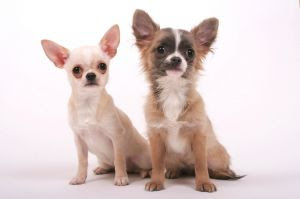
Chihuahua

ChihuahuaChihuahuas are discovered by Americans in Mexico around 1850. The true origins of the Chihuahua's ancestors still remain a mystery but several theories seem to indicate that Spanish traders may have brought a small dog from China to Mexico in their explorations. The Chihuahua first came to be known popularly in Mexico City around 1895, and the breed was named after the city it came from which is Chihuahua, Mexico. Chihuahua was registered by the AKC In 1904 and has since gained popularity in the States. Chihuahua popularity even rise after certain Taco Bell commercials, using this tiny canine as the icon of their company.

Chihuahuas are graceful, alert, swift-moving little dogs with a saucy expression. They have round apple-heads, large protruding eyes and a short, stout muzzle. Their bodies are slightly longer than they are tall, and ears are large and flaring. Although their bodies are fairly evenly-muscled, their bones are prone to injury due to their fragility. Due to their small size Chihuahua has become one of the most adorned dogs and also because it is perfect for apartment living. Chihuahua puppies are so small they can fit in your hand easily. The suitable age to adopt a Chihuahua puppy is between the ages of 4 - 12 months as they will be more mature and agile and not so apt for injury.

You will find Chihuahua in any color or mixture. Their coat can be solid, marked, or splashed in any color combination but the most common colors are red, sable, fawn, black and tan, tricolor, and brindle.

There are two distinct breed types, one with a long coat of soft texture, the other with a short coat. The Long coat ones has a long, soft to touch, slight waviness that have a lot of fringe and often have an undercoat. They have a large fringe on the neck and feathering on the tail, feet and legs. Whereas the Short coat ones has short, glossy, dense, and soft to touch coat.

Chihuahuas are bold or shy, playful and very alert. You will find some that love to alert their owners to whatever is going on around them and some tend to bark. Some breeds are afraid when the wind blows, while others will challenge dogs many times the size of themselves. Chihuahuas tend to be quite devoted to one person and they are sometimes reserved with strangers and a favorite among the elderly. They are graceful, humorous, and a good watchdog. Although playful, Chihuahuas are not to be messed around with because they can be aggressive towards other dogs and wary of strangers. On top of that, they are quite fragile and do not tend to realize it when picking a fight.

Pug

pugThe Pug is one of the cutest and most commonly seen dog breed. One feature of this breed that you can instantly notice is the head which is covered in wrinkles like a small version of a Shar Pei or Bulldog. Pugs have an extremely short muzzle which looks scrunched up and ends with a small black nose. You will often see full expression from their cute faces and large, round eyes combined with small folded ears that give them an adorable and unique face. Despite their small size, the Pug has a broad neck with a dewlap that leads to a wide, square body. Pugs have short skinny legs and a curled tail that lies on its back. Short fur covers their entire small body. The most common fur colors are fawn and black, but they can also be silver or apricot. They have the appearance of a big dog, but a small dog at heart, the Pug is also an easy to please member of the family.

Pugs were probably developed in Asia around the fifth century BC but other theories assumed that Pugs ended up in England after British forces found the dogs in China during an attack. Not only that Pugs become very popular among artists it was also chosen to be a companion in monasteries as well as fashion accessories during the Victorian Era. In 16th century, Pugs finally arrived in Europe and they quickly became adopted as a favorite pet of the wealthy. By 1885 the AKC recognize Pug breeds which has a life expectancy of 12 to15 years.

Pugs are always sweet and cheerful and these little dogs thrive on attention. Pugs are also great for playing with children due to its gentle nature but strangers and dogs will receive the same playful and loving attention a family member would. Pugs are also intelligence which makes them highly trainable but also independent and stubborn. Sensitivity to punishment makes it important to not yell at Pugs or to use a harsh voice when correcting the breed. Colds, eye weeping, allergies and skin problems are some of the most common health problem of this breed. Due to their size, many Pugs find it hard to give birth naturally and need Cesarean Sections. Another important thing for owners to remember is that Pugs will easily over eat and become obese.

Grooming a pug is simple and not time consuming. Regular baths and brushing sessions are needed and you need to clean everyday the wrinkles on their face. Pugs are active and enjoy playing games and walking but they do get tired quickly. Since pugs can become obese easily you need to make sure they exercise to keep them fit and healthy. Pugs can’t withstand harsh climates so special care should be taken to prevent this breed from getting too cold or hot.

Siberian Husky

siberian huskySiberian husky originated from Russia and has a history that dates back thousands of years. Siberian husky was bred to herd reindeer and pull sleds for tribes. This breed was introduced in Alaska in the 1900s and was registered with the AKC in 1930.

The Siberian Husky is a handsome looking dog and has a sturdy and very athletic build. This hardy and robust dog has an eager expression and has small and erect ears that give him an alert appearance. He has a double coat, which is made up of a soft, dense undercoat and a straight, smooth outer coat. The Siberian Husky are available in different colors such as silver, black, red, or gray, with white markings, and some can also be solid white. While the eyes of the Siberian Husky can be blue, brown, parti-color, or mixed. It is a medium sized dog which weighs in at around 35-50 pounds for females and 45-60 pounds for males and stands at 20-21 inches for females, and 21-24 inches for males.

The Siberian Husky also needs a moderate amount of grooming. You need to brush his coat on a twice weekly basis and during heavier periods of shedding brushing should be increased to daily. Since the Siberian Husky is a heavy shedder this dog is not the ideal choice for those suffering from allergies.

Siberian husky is gentle and sweet natured dog and can also be a great family dog due to its dependable nature, loving, affectionate, enjoying attention and interaction from his family. If you cannot dedicate time and attention to this dog it will lead to boredom and destructive behavior such as chewing. The Siberian husky is very energetic and does need plenty of exercise, so he will not be the right choice for those with little time to engage in exercise and activity. This dog is fast, agile, and playful which make it an excellent hiking or jogging companions. A good amount of exercise is necessary for this breed, and you will need to provide a safe and secure exercise and play area for times that he is not on the leash - as these dogs are adept as escaping and loves to dig wholes in your yard.

The Siberian Husky is also a hardworking dog and is able to haul heavy loads over long distances. He may bark and howl from time to time but this breed is generally pretty quite. He will bark to raise an alarm however, and this makes him a very effective watchdog. They tend to be sociable and friendly around strangers but when it comes to animals, the Siberian husky will usually get along okay with other dogs but is not to be trusted around cats and smaller animals due to its high prey instinct. The Siberian husky is best suited to those with some experience of dog ownership who can establish themselves as pack leader.

Japanese Spitz

Any dog lover would want to have a Japanese Spitz because of its mild and clean nature. It is completely white in color. It has been known to have been bred from the German Spitz in Japan.

In terms of appearance, size and characteristic, it is very similar to the Eskimo dog and the Samoyed breed of dogs. It usually weighs at about 6 to 10 kilograms and it is known for its double layer of coat. It has long and straight hair that is very dominant as the outer layer. This is for insulation and for adjusting to different temperatures. While the inner layer coat is short and dense. Its tail is full of white hair that curls over its back and the dryness of the fur makes it look neat and odor-free.

The Japanese Spitz’ ear is pointed and its huge, round pair of eye is very cute to look at. Its nose and lips are black in color. Many people have resorted to having it as a pet because it is very gentle and nice to be with. It loves attention and human contact. Most of all, it is very delighted when it is treated like a member of the family. Aside from that, it is very loyal, obedient and smart. It is preferred by many kids because it is very patient and protective of their owners. They are very affectionate and fun-loving.

Furthermore, they are very alert in a sense that they will tell you if an intruder is present. Another thing about the Japanese Spitz is that it loves the outdoors. They love sunshine and being exposed to many people. This is why most owners of this kind of dog breed take them often for a jog or a walk outside the park or community.

If you treat them kindly, they will give you their utmost loyalty and obedience. Make them feel loved and cared for so that they would not have behavioral problems in the future.


Dog Breed Information

Every pet owner would want to give the best for their dearly loved pooches. Most dog owners buy them dog beds, toys, controlling products and many more. Cats also need proper care and attention. Some people even buy their dog nice accessories, clothing, agility equipment and so much more.

Many people are fond of dogs because they make good companions and they are very loyal to their owners. Some even train them for competitions and to do certain tricks for entertainment. If you are interested in having one, then you should first know about the different dog breeds and how they differ from each other.

It is said that there are more than three hundred breeds of dogs that can be found worldwide but only 150 are recognized by the AKC or the American Kennel Club in the US. These dogs are classified depending on their characteristics and based on their purpose.

The general classifications of dogs are working, sporting, herding, hound, terrier, toy, and non-sporting. The hounds are known for their ability to assist in hunting. They have astounding stamina and great sense of smell.

The greyhound is one of the most popular hound dogs that are used for speed hunting. This is because they have a very keen sight and fast movement. Back then, it was used for hunting deer, fox, hares and many more. Now, it is also used as a racing dog in England.

Hounds are characterized by a slender and strong stature. It has a long head with small but pointed ears. And its fur is smooth but short that is either a combination of white, black or gray.

If you are interested in buying one, make sure that you pick the right breed of dog. Most women prefer the toy dogs like the Chihuahua and the poodle. But these dogs need a lot of maintenance and care.
 

For Comments, Suggestions or Questions you can send an email to:
petblogger@gmail.com


Designed by Adii. Converted to WP-Polaroid Blogger Template by eBlog Templates

Animal and Pet Directory
Pets